
Cornwall in winter isn’t Cornwall in August with a jumper on — and that’s exactly why it’s worth going. You trade the beach-holiday version for something moodier: storm-watching from a clifftop, coast paths with nobody else on them, a pub fire that’s actually lit because it’s actually cold, and a hot tub waiting when you get back. Here’s how to spend it properly.
What’s Cornwall actually like in winter?
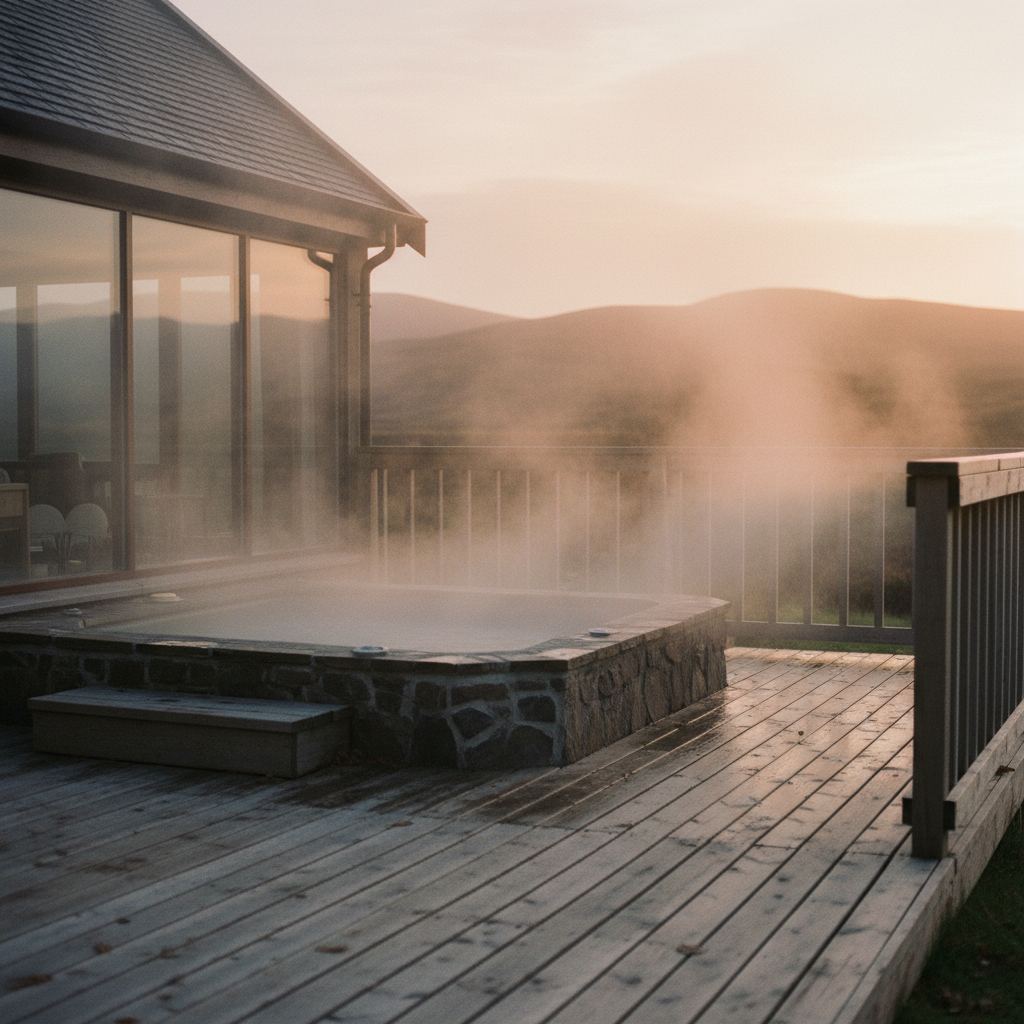
Milder than most of England, thanks to the sea moderating the temperature, but wetter and windier — this is Atlantic-facing coastline, and it acts like it. Hard frosts are rare; big weather systems rolling in off the ocean are not. The north coast, around Bude and the Camel estuary, takes the brunt of it and is where the drama happens. The south coast and the sheltered Roseland peninsula are gentler, with more of the wooded, tucked-away feel that suits a quieter walk.
Days are short — properly short by late December — so the trick to a good winter trip here is building the day around a couple of things done well rather than trying to cram in a full summer itinerary.
It’s also worth saying plainly: some of Cornwall closes for winter. Seasonal cafes along the coast path, ice-cream kiosks, a fair few of the smaller independent shops in the fishing towns — plenty take January and February off entirely, or trim their hours right back. That’s not a reason to avoid the trip, just a reason to check specific places are open before building a day around them, and to have cash on you for the ones that are open but running a skeleton operation.
What’s genuinely worth doing in Cornwall in winter?
Storm-watching
This is the one thing Cornwall does in winter that it simply can’t do in summer. When an Atlantic storm rolls in, the north coast turns into something worth watching from a safe distance — waves hitting harbour walls, spray thrown twenty feet up a cliff face, that sort of thing. Bude and the stretch around the Camel estuary are well known for it. Always watch from an official viewpoint or well back from the edge, and check the Met Office forecast for the day before you set off; big winter swells have caught out plenty of people who underestimated them, and the sea here doesn’t care how good the photo would be.
Empty beaches
The beaches that need a wetsuit and a car park queue in August are yours alone in January. A long walk on a wide, wind-scoured beach with nobody else on it — dog off the lead, hood up, nothing to do but walk it out and turn round — is one of the genuinely underrated things about the British coast in winter. St Ives and the beaches around the Lizard are stunning even under grey skies; arguably more atmospheric than in full summer glare.
There’s a quieter pleasure in it too, one that’s hard to describe until you’ve done it: a beach that held five hundred people in August, entirely to yourself, with just footprints (yours) in the sand and the tide doing its own thing regardless of the season. Bring a flask. Stay longer than feels sensible. It’s one of the best free things to do anywhere in the country.
Where to base yourself: north coast or south?
The two coasts behave differently in winter, and it’s worth picking deliberately rather than by accident. The north coast — Bude, the Camel estuary, the stretch up towards the Cornwall/Devon border — takes the Atlantic weather full-on, which is exactly what you want for storm-watching but means more exposed, blustery walking. The south coast and the Roseland peninsula are more sheltered, wooded in places, and gentler underfoot — a better pick if a howling gale sounds like a nice thing to watch rather than walk through. Plenty of good winter breaks split the difference, basing centrally and driving to whichever coast the day’s forecast favours.
Pub fires
Cornwall has no shortage of proper old pubs, and winter is when they earn the name — real fires, slower evenings, the sort of place where you order the same thing twice because you can’t be bothered to move. This is where the day should end: soaked boots off, something hot in hand, no rush anywhere. Fishing villages along both coasts tend to have at least one pub that leans into the season properly rather than treating winter as an inconvenience — worth asking locally, since the best ones aren’t always the ones with the flashiest sign outside.
If you’ve got a dog with you, most Cornish pubs are genuinely welcoming of well-behaved dogs by the fire, which is one more reason a winter trip here suits dog owners better than a lot of the country. Ring ahead if you’re a larger group or it’s a Friday or Saturday night — the good ones fill up fast once the weather turns.
A hot tub after dark
And then back to the tub. This is the bit that turns “a walk in the cold” into an actual holiday rather than an endurance exercise — a private hot tub with a Cornish sky overhead, the storm (if there’s one about) audible but not on top of you, and nothing left to do that day. We’ve picked through the options for the hot tub lodges we rate in Cornwall, most with sea glimpses from the north coast or tucked into the quieter wooded valleys further south.
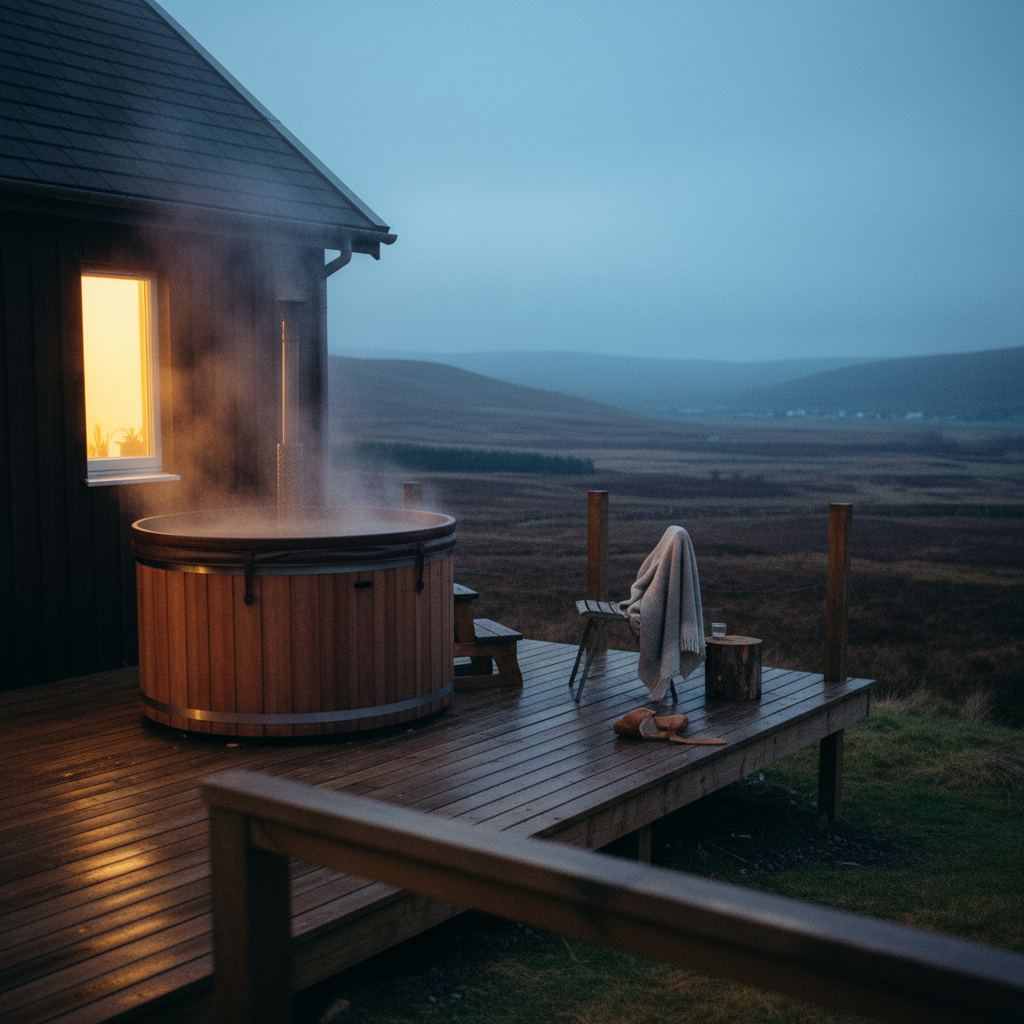
A wet, windy walk feels completely different when you know a hot tub is waiting at the other end of it.
Gardens, towns and Christmas lights
When the weather turns properly wild, Cornwall has indoor and sheltered options that stay open through winter. The Eden Project runs right through the season, its biomes a warm, green antidote to a grey day, and it often puts on an ice rink and events over Christmas. The Lost Gardens of Heligan and Trebah, down on the sheltered south coast, are quieter and more atmospheric in winter than in peak summer, with camellias and early magnolias out well before spring. The fishing towns reward a wander too: Padstow round its harbour, and Mousehole, whose famous Christmas lights strung across the harbour are worth timing a December visit around — genuinely one of the best free things to do in the county all year.
And yes, people do surf here in winter — the north coast picks up the biggest, cleanest swells of the year from December to February, and a wetsuited surfer carving up an empty, rugged beach is part of the scenery even when you’ve no intention of getting in yourself. It’s a fair reminder that to visit Cornwall in winter isn’t to visit a closed county; it’s to have the best of it, minus the crowds.
What does a typical Cornwall winter day actually look like?
Something like this, in our experience: a later start than a summer trip warrants, since there’s no beach queue to beat. A late-morning coastal walk — an hour or two is plenty when the wind’s up — followed by lunch somewhere that still has its doors open, which in winter usually means checking ahead rather than assuming. An afternoon given over to whatever the weather’s doing: if a storm’s rolling in, that becomes the afternoon’s entertainment; if it’s merely grey and blustery, a second, shorter walk or a look round one of the county’s National Trust gardens or castles that stay open year-round often fits the bill. Then home before full dark, a pub dinner by a fire, and the hot tub to finish, with the sound of wind or rain somewhere in the background rather than right on top of you.
It’s a slower shape than a summer day here, and that’s rather the appeal. Nobody’s trying to fit in four beaches and an ice cream before the car park fills up. There’s time to actually notice the place.
Are Cornwall’s beaches dog friendly in winter?
Generally, yes, and more so than in summer. Many Cornish beaches run seasonal dog restrictions through the busiest months, and those restrictions typically lift once the season quietens down — but the exact dates and rules vary from beach to beach and council to council, so don’t assume; check current signage or the relevant council’s website before you set off, especially if a specific beach is the whole point of your day. If dogs are the main reason for the trip, our dog friendly cottages in Cornwall guide is worth reading alongside this one.
A short packing list for a Cornish winter break
- A proper waterproof coat, not a shower-proof one — this is Atlantic rain
- Good boots with actual grip; coast paths get slick
- A head torch, since it’s dark by mid-afternoon in December
- Swimwear and a robe for the hot tub, obviously
- Cash or a card for the small independent cafes that don’t always take contactless
Does a Cornwall winter break really need a hot tub?
Strictly, no — you can do all of the above without one. But the shape of a winter Cornwall day is walk, get cold, get wet, then need somewhere to properly warm back up, and a hot tub does that better than a radiator ever will. It’s also, frankly, what makes the whole trip photograph well after the fact, if that matters to you — steam rising off the water with a dark, stormy sky behind it is about as Cornish-winter as it gets.
We haven’t stayed at every lodge on our list — nobody realistically can, across a county this size — but we’ve checked the pet policies and read the reviews properly on the ones we do recommend. Start with the hot tub lodges we rate in Cornwall, and if you’re bringing a dog, cross-reference against our dog friendly Cornwall picks before you book.