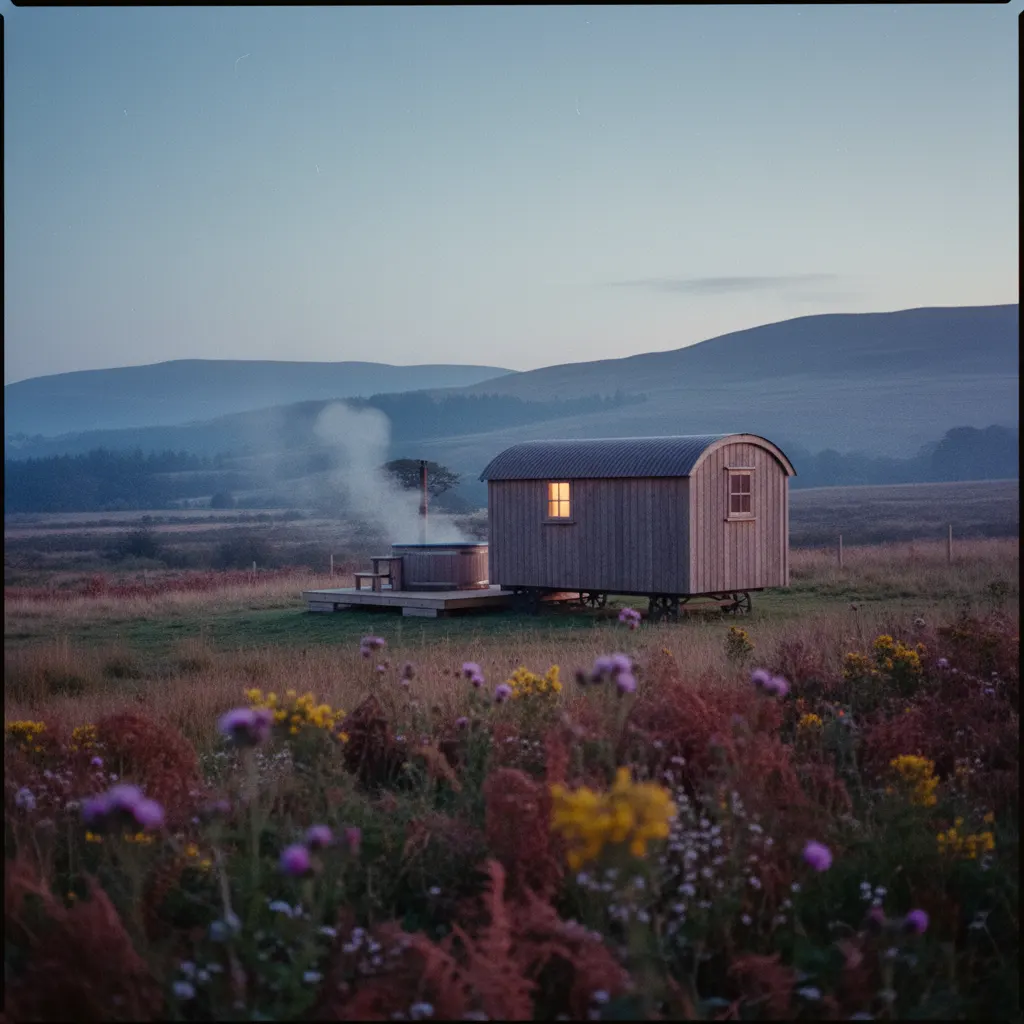
A shepherd’s hut was built to follow the flock. The original huts were pulled out to the fields at lambing time on their cast-iron wheels, with a small stove to keep the shepherd warm through the cold nights, and towed back in again once the lambs were strong enough to manage without watching over. That history is why the shape has barely changed: one room, a curved or gabled roof, a stable-style door at one end and a window at the other, small enough to fit down a farm track and light enough to move by hand or tractor. Holiday shepherd’s huts keep the proportions almost exactly, right down to the wheels, which are usually still there even though the hut has not moved in years. That is the whole point of them — this is not a lodge with the volume turned down, it is a different kind of building with its own logic and its own limits.
Inside, everything earns its place. A proper bed, usually a double, sits at one end; a wood-burner sits near the door, where the flue can vent straight up and out; the rest is a bench, a rail, a shelf, built in rather than added on, because there is rarely a spare wall to stand loose furniture against. Done well, that is what keeps a shepherd’s hut snug rather than cramped — high ceilings at the ridge, a big window that pulls in more light than the footprint suggests, enough room to sit either side of the stove with a book and a drink. Done badly, it is a shed with a bed in it. We check for the difference before a hut goes on this list at all: window size, headroom over the bed, and whether the stove is a proper multi-fuel burner or a token electric heater standing in for one. At the luxury glamping end, a luxury shepherds hut retreat in the countryside is about as snug as it gets, and many are dog friendly, so the whole household comes along; a shepherd hut like this suits a couple after a quiet retreat rather than a crowd.